When preparing for a job interview, you probably think about your education, work experience, and professional skills. But there’s something else employers want to know: what kind of person will you be at work?
Businesses want employees who can be trusted, work well with others, and handle responsibilities professionally. That’s why character traits play an important role in the hiring process.
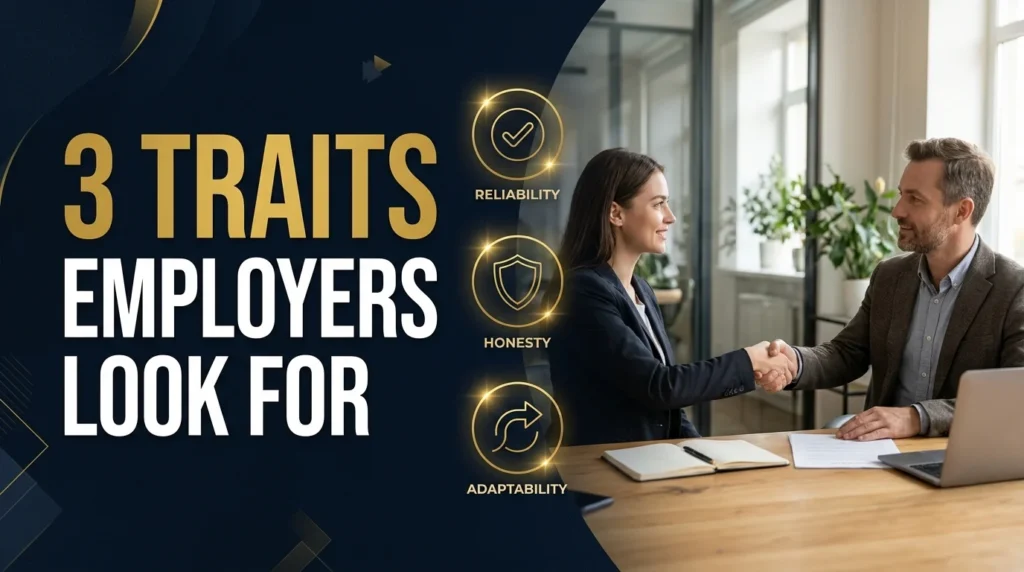
If you’re wondering, “List at least three character traits you think businesses are looking for during the interview process. Explain why businesses want to find these traits in someone they hire,” three excellent examples are reliability, honesty, and adaptability. Other valuable traits include communication skills, teamwork, problem-solving, and a willingness to learn.
In this guide, we’ll explain these important character traits, why employers value them, and how you can demonstrate them during your next job interview.
Why Do Businesses Look for Character Traits During the Interview Process?
Hiring an employee involves more than checking qualifications and reviewing a resume. Employers also want to understand how a candidate might behave in real workplace situations.
For example, a company may hire someone with excellent technical skills, but that person could still struggle if they regularly miss deadlines, refuse feedback, or have difficulty working with coworkers.
Character traits help employers evaluate qualities that may influence an employee’s performance, relationships, and professional development.
Businesses often look for candidates who are dependable, honest, cooperative, and willing to improve. These qualities can help create a productive workplace and build trust between employees, managers, and customers.
According to the U.S. Office of Personnel Management, structured interviews can assess job-related competencies by asking candidates consistent questions about their experience and behavior.
1. Reliability: Being Someone Employers Can Trust
Reliability is one of the most important character traits businesses look for during the interview process. A reliable employee arrives on time, meets deadlines, follows instructions, and completes assigned responsibilities.
Why do businesses want reliable employees?
Employers need people they can count on. When employees complete their work consistently, managers can plan more effectively, projects are less likely to be delayed, and coworkers can depend on one another.
For example, imagine a manager asks an employee to prepare a report before a meeting. A reliable employee organizes their time, completes the report, and checks it for errors before submitting it.
This behavior shows responsibility and respect for other people’s time.
How to demonstrate reliability in an interview:
- Explain how you organize your tasks and meet deadlines.
- Share an example of completing an important responsibility.
- Describe how you communicate when a problem arises.
- Show that you take your commitments seriously.
2. Honesty and Integrity: Doing the Right Thing
Honesty means telling the truth, while integrity means making ethical decisions and doing the right thing, even when nobody is watching.
Businesses need employees who can handle responsibilities fairly, protect confidential information, follow company policies, and admit mistakes.
Why do businesses value honesty?
Trust is essential in almost every workplace. Employers want to know that employees will provide accurate information, treat customers fairly, and take responsibility when something goes wrong.
For example, suppose an employee accidentally enters incorrect information into a customer order. Instead of hiding the mistake, the employee informs the manager and helps correct it.
That response demonstrates honesty and accountability.
How to demonstrate honesty during an interview:
Share a real example of a time you admitted a mistake, handled a difficult situation ethically, or took responsibility for your actions. Explain what you learned and how you would apply that lesson in the future.
3. Communication Skills: Expressing Ideas Clearly
Communication is another important quality employers evaluate during interviews. Good communication involves speaking clearly, listening carefully, asking questions, and sharing information respectfully.
Why do businesses want employees with strong communication skills?
Poor communication can lead to mistakes, missed deadlines, unhappy customers, and unnecessary workplace conflicts. Employees who communicate effectively can understand instructions, explain problems, and collaborate with others.
For example, if an employee doesn’t understand an assignment, asking the manager for clarification can prevent costly mistakes.
How to demonstrate communication skills in an interview:
- Listen carefully to each question.
- Give clear, relevant answers.
- Avoid interrupting the interviewer.
- Explain your ideas in a simple, organized way.
- Ask thoughtful questions about the role.
You don’t need complicated vocabulary to be a good communicator. Being clear, respectful, and attentive is often more effective.
4. Teamwork: Working Well With Others
Most businesses depend on employees working together to achieve shared goals. Teamwork involves respecting different opinions, sharing information, helping coworkers, and contributing to group success.
Why do employers look for teamwork?
An employee who refuses to cooperate can slow down a project and create unnecessary tension. On the other hand, a cooperative employee helps build a positive work environment and makes it easier for teams to accomplish their goals.
For example, during a group project, an employee who shares ideas, listens to colleagues, and helps resolve disagreements demonstrates strong teamwork.
How to demonstrate teamwork during an interview:
Describe a time you worked with others to complete a project, solve a problem, or reach a common goal. Focus on your contribution and explain how you handled differences of opinion professionally.
5. Adaptability: Handling Change Positively
Adaptability is the ability to adjust when responsibilities, priorities, or workplace conditions change.
Businesses regularly introduce new technology, update procedures, and respond to changing customer needs. Employees must be willing to learn new processes and adjust their approach when necessary.
Why do businesses value adaptability?
Adaptable employees can respond to unexpected challenges without losing sight of their goals. They are also more prepared to learn new skills and handle changing responsibilities.
For example, when a company introduces new software, an adaptable employee takes time to learn the system instead of refusing to use it.
How to demonstrate adaptability:
Explain a situation where you learned a new skill, adjusted to an unexpected change, or accepted constructive feedback. Show that you’re open to improvement and willing to find practical solutions.
6. Problem-Solving: Finding Practical Solutions
Problems are a normal part of working life. Employees may face customer complaints, technical difficulties, scheduling conflicts, or unexpected project delays.
Problem-solving means identifying the cause of a challenge, considering possible solutions, and taking appropriate action.
Why do employers look for problem-solving skills?
Businesses need employees who can think clearly and respond constructively when something goes wrong. Strong problem-solving skills can help prevent small issues from becoming bigger problems.
For example, if a customer reports a delayed order, an employee might check the order status, identify the cause, explain the situation, and explore available solutions.
How to demonstrate problem-solving skills:
Prepare an example that explains the problem you faced, the steps you took, and the result. You can use examples from previous jobs, school projects, volunteer activities, or personal projects.
7. Willingness to Learn: Improving Your Skills Over Time
No employee knows everything. Even experienced professionals must learn new tools, procedures, and industry practices.
A willingness to learn means accepting feedback, asking questions, practicing new skills, and looking for ways to improve.
Why do businesses want employees who are willing to learn?
Employers want people who can develop with the organization. Employees who learn from their experiences may become more effective, handle additional responsibilities, and adapt to new challenges.
For example, an employee who receives feedback about a presentation can use that advice to improve future presentations.
How to demonstrate a willingness to learn:
Talk about a skill you’re developing or a time you used feedback to improve your performance. Be honest about what you know and show that you’re prepared to learn what the job requires.
How to Demonstrate Character Traits During a Job Interview
Knowing which traits employers value is only the first step. You also need to demonstrate them through specific examples.
One useful approach is the STAR method:
- Situation: Describe the situation you faced.
- Task: Explain what you needed to accomplish.
- Action: Describe the steps you took.
- Result: Share the outcome and what you learned.
For example, if an interviewer asks how you handle pressure, describe a time you had several deadlines, explain how you prioritized your responsibilities, and share how you completed the work.
Choose honest examples that relate to the job. If you’re applying for your first position, you can use experiences from school, volunteering, internships, or personal projects.
Avoid simply saying, “I’m hardworking” or “I’m a great team player.” Explain what you did that demonstrates those qualities.
Frequently Asked Questions
1. What are three character traits businesses look for during the interview process?
Three important character traits are reliability, honesty, and adaptability. Reliability helps employers trust employees to complete their work, honesty supports ethical behavior, and adaptability helps employees respond to change.
2. Why do businesses want to find these traits in someone they hire?
Businesses look for these traits because they can influence workplace performance, teamwork, customer relationships, and professional responsibility. Employers want people who can contribute positively to the organization and handle their responsibilities appropriately.
3. What other character traits do employers value?
Employers may also value communication skills, teamwork, problem-solving, initiative, patience, accountability, and a willingness to learn. The most important qualities depend on the position and its responsibilities.
4. How can I show my character traits without work experience?
You can use examples from school projects, volunteering, internships, sports, or personal responsibilities. Explain what happened, what you did, and what the experience taught you.
5. Are character traits more important than technical skills?
Both matter. Technical skills help employees perform specific job duties, while character traits can influence how they communicate, manage responsibilities, learn, and work with others. Employers generally evaluate both according to the needs of the position.
Conclusion
If someone asks you to list at least three character traits you think businesses are looking for during the interview process and explain why businesses want to find these traits in someone they hire, a strong answer is reliability, honesty, and adaptability.
Reliability helps employers depend on you, honesty builds trust, and adaptability allows you to handle change. Communication, teamwork, problem-solving, and a willingness to learn are also valuable qualities in many workplaces.
Before your next interview, review the job description and prepare real examples that demonstrate your strongest traits. You don’t need to present yourself as a perfect candidate. Focus on being honest, prepared, and ready to contribute.
Your next step: Choose three traits that match the job you’re applying for and practice explaining why each one makes you a valuable candidate.

Sushil Kumar is a results-focused digital marketer specializing in SEO, content planning, and AI-powered workflows. His platform offers easy-to-use AI prompts for creating professional photos.