
Managing money sounds simple until your paycheck arrives and your bills start piling up. You want to save, pay off debt, cover everyday expenses, and still enjoy life. That’s where budgeting rules can help. One popular option is the 50/30/20 rule, which divides your after-tax income into needs, wants, and savings or debt payments.
But here’s the thing: a budgeting strategy that works for one person might not work for everyone.
So, when might the 50/30/20 rule not be the best saving strategy to use? It may not be the right fit when your income is too low to cover basic expenses, your rent takes up most of your paycheck, you’re dealing with high-interest debt, or you’re working toward an important financial goal that requires a different approach.
Let’s look at when this popular budgeting method can fall short, why that happens, and what you can do instead.
What Is the 50/30/20 Budgeting Rule?
The 50/30/20 rule is a simple budgeting method that helps you divide your after-tax income into three categories.
- 50% for needs: Essential expenses such as housing, groceries, utilities, transportation, insurance, and minimum debt payments.
- 30% for wants: Nonessential spending, including entertainment, dining out, shopping, subscriptions, and vacations.
- 20% for savings and debt repayment: Emergency savings, retirement contributions, and additional payments toward debt.
For example, if your monthly take-home pay is $4,000, your budget would look like this:
| Budget category | Percentage | Monthly amount |
|---|---|---|
| Needs | 50% | $2,000 |
| Wants | 30% | $1,200 |
| Savings and extra debt payments | 20% | $800 |
| Total | 100% | $4,000 |
The biggest advantage of this rule is its simplicity. You don’t have to track every dollar in dozens of categories to get started.
However, these percentages are guidelines, not financial laws. Your actual budget should reflect your income, living costs, debt, family responsibilities, and financial goals.
7 Situations When the 50/30/20 Rule May Not Be the Best Saving Strategy
1. Your Income Barely Covers Your Basic Needs
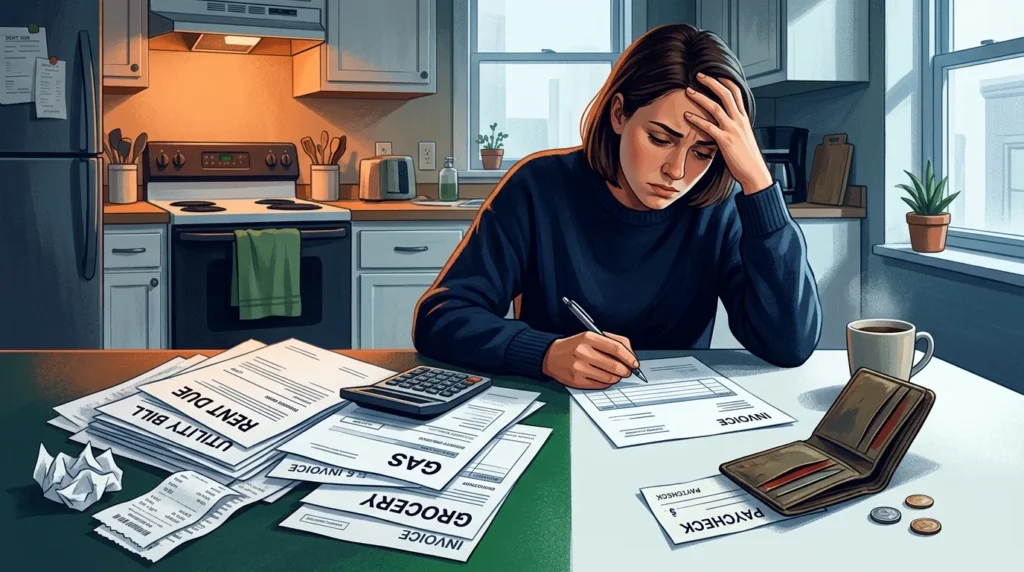
One of the biggest problems with the 50/30/20 rule is that it assumes you can cover your essential expenses with half of your take-home pay.
That may be unrealistic if you live in an expensive city, support a family, or earn a modest income.
Imagine you bring home $2,500 per month. According to the rule, your needs should cost no more than $1,250. But if your rent is $1,100, groceries cost $400, utilities are $150, and transportation costs $200, your essential expenses already total $1,850.
That’s $600 more than the recommended limit, before accounting for healthcare or other necessities.
Trying to force your spending into the 50% category could leave you feeling frustrated or guilty, even when you’re already being careful with money.
What to do instead: Start with your actual essential expenses. Pay for housing, food, utilities, transportation, and other necessities first. Then set a realistic savings target based on what remains.
Even saving $25 or $50 each month can help you establish a habit while you work toward increasing your income or reducing expenses.
2. Your Housing Costs Are Too High
Housing is often the largest expense in an American household budget. Rent, mortgage payments, property taxes, homeowners insurance, and maintenance can consume a significant portion of your income.
If housing alone takes up 40% of your take-home pay, you have only 10% left for all your other needs if you want to stay within the rule’s 50% target.
That can be difficult if you also have a car payment, childcare costs, medical expenses, or student loans.
For example, someone earning $3,500 per month after taxes might spend $1,400 on housing. That leaves $350 within the suggested needs category for groceries, transportation, utilities, and everything else.
For many people, that’s simply not enough.
What to do instead: Consider a needs-first budget. Calculate your essential expenses before deciding how much to spend on wants or save.
Depending on your circumstances, you might temporarily use a 60/20/20 or 70/15/15 split. These are illustrative alternatives, not universal recommendations. Choose percentages that reflect your actual costs, and revisit them when your financial situation changes.
3. You’re Struggling With High-Interest Debt
The 50/30/20 rule places savings and debt repayment in the same 20% category. That can make budgeting easier, but it doesn’t tell you how to prioritize different financial obligations.
Suppose you have $5,000 in credit card debt with a 25% annual interest rate. Carrying that balance can be expensive, and interest may keep growing while you’re trying to build savings.
In this situation, putting every available dollar toward savings while making only minimum payments on expensive debt may cost you more over time.
On the other hand, using all your available cash to repay debt can leave you vulnerable to an unexpected car repair or medical bill.
What to do instead:
- Make at least the required minimum payments on all debts.
- Keep a small cash reserve for urgent, unexpected expenses.
- Direct additional money toward high-interest debt when practical.
- Continue building savings as your debt burden decreases.
The right balance depends on your job security, essential expenses, interest rates, and access to emergency funds.
You don’t necessarily have to choose between saving and debt repayment. The goal is to avoid taking on new debt whenever an unexpected expense appears.
4. Your Income Changes From Month to Month
The 50/30/20 rule is easier to follow when your income is predictable. If you receive roughly the same paycheck every two weeks, planning monthly expenses is relatively straightforward.
But what if you’re a freelancer, gig worker, seasonal employee, commission-based salesperson, or small-business owner?
One month, you might bring home $4,500. The next month, you might earn only $2,200.
A rigid budget can become difficult to maintain when your income fluctuates.
For example, saving 20% of a strong month might be easy, but saving the same percentage during a slow month could leave you short on rent or groceries.
What to do instead: Build your budget around your essential expenses and your most reliable income.
Try this approach:
- Calculate your average monthly income using several months of records.
- Identify your minimum essential expenses.
- Set aside money from stronger months to cover weaker ones.
- Build a larger cash buffer when your income allows.
- Review your budget monthly instead of expecting every month to look the same.
If your income is unpredictable, a cash-flow budget may be more useful than a fixed percentage rule.
5. You’re Facing an Important Short-Term Financial Goal
Sometimes, your financial priorities require a temporary change in how you divide your income.
Maybe you’re saving for a home down payment, preparing for a major move, paying for professional training, or building enough cash to cover an upcoming expense.
In these situations, saving just 20% of your income may not get you to your goal quickly enough.
Let’s say you want to save $6,000 over the next 12 months. You would need to put aside approximately $500 each month.
If your take-home pay is $2,500, that goal represents 20% of your income. But if you already have high essential expenses, reaching it may require reducing discretionary spending or extending your deadline.
What to do instead: Work backward from your goal.
Divide the amount you need by the number of months available. Then compare that monthly target with your actual budget.
If the number is unrealistic, consider adjusting the timeline, increasing your income, or reducing the goal’s cost. Avoid cutting essential expenses or taking on expensive debt just to meet an arbitrary deadline.
A good savings plan should be ambitious enough to move you forward but realistic enough to maintain.
6. You Have Little or No Emergency Savings
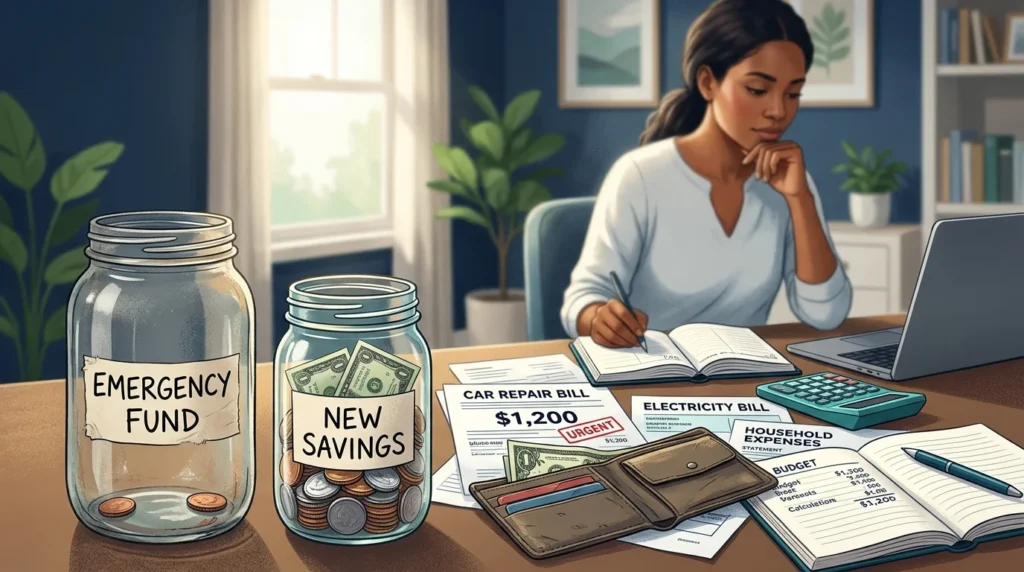
The 50/30/20 rule recommends allocating 20% of your income to savings and debt payments, but it doesn’t explain which financial goal should come first.
If you have no emergency savings, following a generic percentage split may not give you enough flexibility when an unexpected expense appears.
Imagine your car breaks down and you need $700 for repairs. If you don’t have cash available, you might have to put the expense on a credit card.
Now you’re dealing with both the original problem and a new debt balance.
The Consumer Financial Protection Bureau (CFPB) explains that emergency savings can help people manage unexpected expenses and reduce reliance on borrowing.
What to do instead: Make building an emergency fund one of your first financial priorities.
You don’t need to save thousands of dollars overnight. Start with a manageable target, such as $500 or $1,000, depending on your circumstances and likely emergencies.
After reaching that initial goal, work toward a larger reserve. A common longer-term target is three to six months of essential living expenses, although the right amount depends on your job stability, household needs, insurance, and available support.
Keep emergency money somewhere safe and accessible rather than investing money you may need immediately.
7. Your Financial Goals Require a Different Balance
The final reason the 50/30/20 rule might not work is that it doesn’t account for every person’s stage of life.
Someone starting their first job may need to focus on building an emergency fund. A parent may need to prioritize childcare and education costs. A person approaching retirement may need to increase retirement contributions.
Similarly, someone with a stable income and manageable expenses may be able to save 30% or even 40% of their take-home pay.
There is no reason to limit yourself to a 20% savings target if your circumstances allow you to save more comfortably.
What to do instead: Build your budget around your most important financial priorities.
Consider whether you need to focus on:
- Creating an emergency fund.
- Paying off high-interest debt.
- Contributing enough to a workplace retirement plan to receive an available employer match.
- Saving for a home or education.
- Increasing retirement contributions.
- Preparing for family expenses or a career change.
Your percentages can change as your priorities change. The most useful budget is one that supports your current needs while helping you move toward your longer-term goals.
What Are the Best Alternatives to the 50/30/20 Rule?
If the traditional approach doesn’t fit your finances, you have several other options.
1. The Needs-First Budget
This method starts with your essential expenses instead of assigning them a fixed percentage.
First, calculate the cost of housing, groceries, utilities, transportation, insurance, and minimum debt payments. Then decide how much you can realistically allocate to savings and discretionary spending.
It’s particularly useful when your income is limited or living costs are high.
2. The Zero-Based Budget
With a zero-based budget, you assign every dollar of your expected income a purpose.
For example, your income might be divided among rent, groceries, transportation, debt repayment, savings, and entertainment. Your income minus all planned allocations equals zero.
That doesn’t mean you must spend all your money. Savings and emergency funds are budget categories, too.
This approach is useful if you want more control over where your money goes.
3. The Pay-Yourself-First Method
This method prioritizes saving before discretionary spending.
When your paycheck arrives, you automatically transfer a manageable amount into savings or retirement accounts. Then you use the remaining money to cover expenses.
It works well for people with predictable income who want to build consistent savings habits.
However, make sure your essential bills and minimum debt payments remain covered. The savings amount should be realistic, not so aggressive that you have to borrow money later.
4. A Flexible Percentage Budget
You can also adjust the 50/30/20 rule to fit your circumstances.
For example, a person with relatively low living costs might choose a budget that allocates 50% to needs, 20% to wants, and 30% to savings and debt repayment.
Someone with higher essential expenses might temporarily allocate 65% to needs, 15% to wants, and 20% to savings and debt repayment.
These examples are starting points rather than rules you must follow. What matters most is whether your budget covers necessities, manages debt responsibly, and supports your goals.
How to Choose the Right Budgeting Strategy for Your Situation
Before choosing a budgeting method, take a few minutes to review your financial picture.
Step 1: Calculate your take-home income.
Use the amount you actually receive after taxes and payroll deductions.
Step 2: List your essential expenses.
Include housing, groceries, utilities, transportation, insurance, healthcare, childcare, and minimum debt payments.
Step 3: Review your debt.
Write down your balances, interest rates, and minimum payments. High-interest debt may deserve extra attention.
Step 4: Check your emergency savings.
Determine whether you have enough accessible cash to handle an unexpected expense without immediately borrowing.
Step 5: Set a realistic savings target.
Choose a monthly amount that fits your actual budget. If 20% isn’t realistic today, start smaller and increase it when your finances improve.
Step 6: Review your budget regularly.
Check your spending at least once a month. Update your plan when your income, housing costs, debt, or family responsibilities change.
Remember, budgeting isn’t about getting every percentage right. It’s about making informed decisions with the money you have.
FAQs
1. When might the 50/30/20 rule not be the best saving strategy to use?
The rule may not be the best fit when your income barely covers basic needs, housing costs are high, you have expensive debt, your income fluctuates, or you’re working toward an urgent financial goal. In these situations, a needs-first, zero-based, or flexible budget may work better.
2. Is the 50/30/20 rule realistic for low-income households?
Not always. Essential expenses can consume much more than 50% of a low-income household’s take-home pay. A realistic budget should prioritize necessities and minimum debt payments, then allocate any remaining money to savings and discretionary spending.
3. Should I save money or pay off debt first?
You generally need to make minimum payments on all debts. It’s also sensible to keep some emergency cash available so an unexpected expense doesn’t force you to borrow more. After that, prioritizing high-interest debt can reduce the amount you pay in interest. Your exact strategy depends on your financial circumstances.
4. Can I save more than 20% of my income?
Absolutely. The 20% target is a guideline, not a limit. If your essential expenses are manageable and you can save more without neglecting important needs, increasing your savings rate may help you reach financial goals sooner.
5. What is the best alternative to the 50/30/20 rule?
There isn’t one universal alternative. A needs-first budget can help when money is tight, a zero-based budget offers detailed control, and the pay-yourself-first method encourages consistent saving. Choose the approach that fits your income, expenses, and financial priorities.
Final Thoughts
The 50/30/20 rule can be a helpful starting point, especially if you’re new to budgeting. But it isn’t the right solution for every financial situation.
If your basic expenses consume most of your income, you’re dealing with high-interest debt, or your paycheck changes from month to month, forcing your finances into fixed percentages may create more stress than value.
Instead, focus on covering your necessities, managing debt, building emergency savings, and setting realistic financial goals. Start with what you can afford today, then adjust your strategy as your circumstances improve.
Your next step: Review your last month’s income and expenses. Identify one area where you can make a practical change, whether that’s reducing an unnecessary subscription, setting up a small automatic savings transfer, or creating a plan to tackle high-interest debt.
You don’t need a perfect budget to make progress. You just need a plan that works for your life.

Sushil Kumar is a results-focused digital marketer specializing in SEO, content planning, and AI-powered workflows. His platform offers easy-to-use AI prompts for creating professional photos.